Sarah Durrand is a poet residing in San Diego, CA. Their work has appeared in Sad Girls Club Literary Review and Maya’s Micros. In their spare time, they enjoy reading, rollerblading, tending to their precarious garden, and talking about the birds that visit their bird feeder. Email them at sgdurrand@gmail.com.
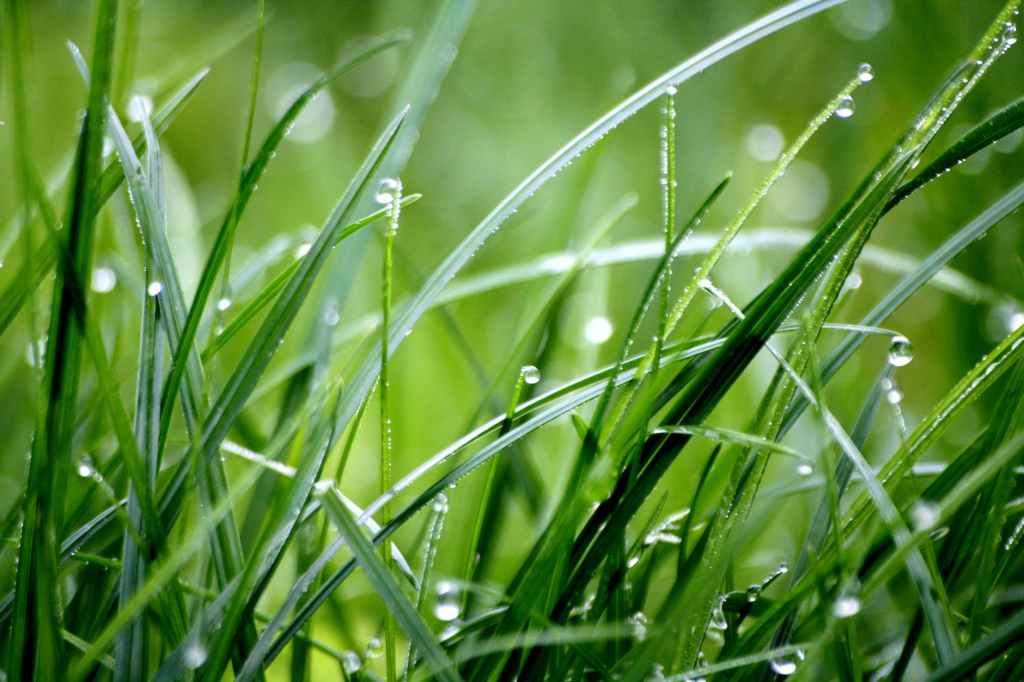
Wild grass
We were told as children
that each blade of grass
has millions of microscopic
hooks
and that’s why it feels
itchy on our legs and backs
and almost sticky on our
fingers.
I should like to lay you
in a field of tall,
wild grass,
breathing in the breeze,
hook myself to you
stuck together some
distance from the
train tracks –
scratch this itch
and see if it lingers.
THE MOON
You read online
after hours of aimless
staring at web pages
that Jupiter is the
closest it’s been in
fifty-nine years
and you can even see
a moon on it with
just binoculars.
At 2 a.m. you took
your binoculars
and bravely went to the curb
30 feet from your house.
You saw a speck –
THE MOON
but it danced and zigged
because your hands aren’t steady
and your binoculars are cheap.
You went back inside.
Blue pansies
I got home and
frantically flipped through
seed catalogs
desperate to find
you in nature.
Your eyes are far beyond
blue pansies
but they were the closest I came.
In the backyard
Red wine and succulents,
impish thoughts, petulant,
a hot and wistful temperament –
my mind falls skyward
to you.
Gently swaying pink hibiscus;
I’m not saying that I miss this
but image: you, barely dressed –
my heart falls wayward
to you.
Mint and basil blooming west
begging of us spooning best;
tonight and then: ruined rest –
as I collapse inward
on you.
Ancient philosopher
I dreamt you called to say the world had
finally broken you down.
Fires, plagues, politics, and a family loss
were enough for you to decisively dial me
(but trip over your words)
that you only thought about
and needed me.
It was a dream,
but an ancient philosopher said that
if you think of something, then it exists on some level
so I drove my car through the same old streets,
irrevocably changed and closer to you,
convinced the dream wasn’t because
I was pining for you
but because you were pining for me.
You bought yourself pink carnations
Pink carnations
say “be nice to yourself”
while you’re flooded with memories
of a complicated ex
who you hate to admit
has reignited your poetry.
Pink carnations
sing “be soft with yourself”
as recollections build
while you live in a home
with someone who isn’t
as nice as you hoped.
Pink carnations
beg “be at peace with yourself”
as your heart beats a fury
of unseized moments
nudging outwards
to never-acted glances.
Pink carnations
whisper
“what do you want for yourself?”
You look at them
scared of how the flowers wilt –
you’re not thinking of
what flowers may come.
Sunflower dreams
He probably has an actual bed
(which is something anyone else would assume) –
but my visions take place on a mattress overflowing a frame
low to the ground
where the quiet sounds of us
pour onto the floor and
spill outward the walls
lapping against dark, dirty hardwood.
Sunlight splashes through a window
through which we could see
Mission Dolores Park –
like the light is yellow petals
and, in our hideaway,
we’re the interwoven seeds.
At Monet’s water lilies
You looked lovely
standing in front of
the impressionists.
You’re so self-assured
yet the negative space
in a dreamy pond
commands you.
Now, instead of
driving
and heat,
you talk of bridges at dawn,
and instead of
“behold the man,”
you want a tattoo
of a water lily.
Pastels and softness
are a strange relief
upon you.
From the Editor:
We hope that readers receive In Parentheses as a medium through which the evolution of human thought can be appreciated, nurtured and precipitated. It will present a dynamo of artistic expression, journalism, informal analysis of our daily world, entertainment of ideas considered lofty and criticism of today’s popular culture. The featured content does not follow any specific ideology except for that of intellectual expansion of the masses.
Founded in late 2011, In Parentheses prides itself upon analysis of the current condition of intelligence in the minds of these young people, and building a hypothesis for one looming question: what comes after Post-Modernism?
The idea for this magazine stems from a simple conversation regarding the aforementioned question, which drew out the need to identify our generation’s place in literary history.
To view the types of work we typically publish, preview or purchase our past issues.
Please join our community on Facebook, Twitter, or Instagram at @inparenth.
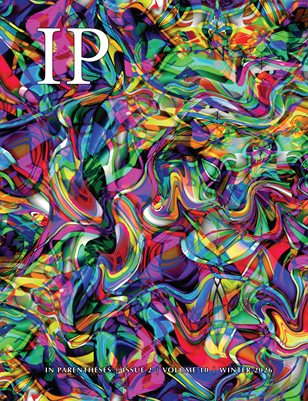
By In Parentheses in Volume 10
44 pages, published 1/15/2026

 in parentheses
enter the discussion: