Norah Clifford grew up in Lambertville, New Jersey. She holds a B.A. in Creative Writing with a minor in Music Performance from Franklin & Marshall College. Norah currently lives in New Orleans, Louisiana where she interns with the Tennessee Williams Festival nonprofit.
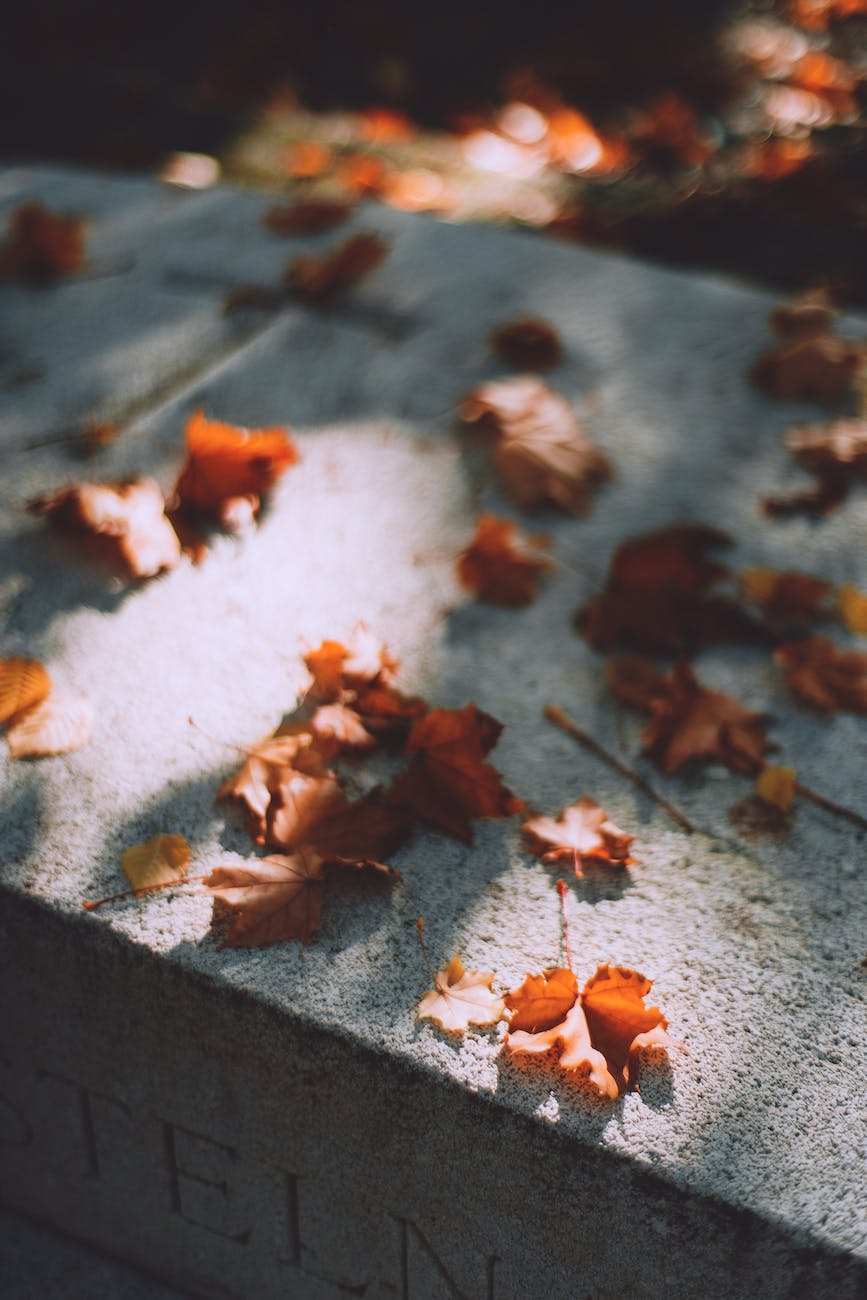
I Planted Your Headstone in Our Playground Park
My kiss sails from the open car window,
braids through branches and snakes around limbs
that straddle sunlight over the Eden of a patchy
grass collage – our makeshift recess soccer field.
Invisible, ethereal roots rummage
through doughy earth like the tumor that sat
at the base of your brain stem, though I find
one key difference: one sustains while the other
steals. Ribbons knotted by my sixth-grade fingers
rot. Frozen in ten frosts and melted each spring
the powder still pollinates glassy eyes. Hollow
I hover at the base of the tree trunk and together
we drown in the deceptive protection
of our neighboring grandfather oak. I grow
in tandem with your botanic obituary, but
each kiss I send evaporates in sour winds
and the oak tree’s shadow swallows our bodies whole.
9-1-1, Put Me Through To Home
Wrap hands around your elbows and cradle
your chest. Breath fills your lungs
with the voice that sang you to sleep in off-key
lullabies. Satin syllables flush your cheeks
faster than the stale car heater
as she counts out your breathing:
In, 2, 3, 4.
Out, 2, 3, 4.
Picture velvet cheeks overwhelmed with freckles
that spill over into the eye; one speck suspended
in a pool of deep emerald. Laugh at the bad joke,
the lopsided pun, she makes to cheer you up.
Eyes closed, imagine creases at the corners
of upturned lips. Mirror her manners so she
can hear your smile through the phone
before you hang up. Doesn’t matter
if it doesn’t last. Doesn’t matter
if tears replenish your matching green
eyes after the tone. Smile through
the speaker and say thank you.
An Absent New Orleans Gravesite
The dead walk next to us here, if you believe
that kind of thing. That people can survive in murky images
and voodoo performed by sweaty palms. Our ghosts
can sleep in muddy puddles or dance in gentle raindrops,
rejecting the open umbrella we still hold out to them,
just in case. Mrs. Louis Armstrong had her husband
buried in Queens. He needs his rest. Here, too many people
wading through marshland to gawk with cameras.
He would be swept back into the second line swinging
along Bourbon; they would need his golden horn,
and he would not rest. So instead, we’ll steal his voice
for records spinning jazz at family dinners. My grandmother
is buried in Staten Island. I wonder if that’s close enough
to cross paths with Louis on New York streets. Or in death,
has he returned home? Music a magnet for his soul polarizing
the afterlife where we’re promised peace. Songs
draining spirits from cemeteries pulling my grandmother
back home to Scotland. Though secretly, I’ll wish
that we are her magnet. She’ll tune into our melodies
winding down streets and curling from turntables, following
our static sound. Finding herself tripping on Louisiana bricks
next to me, swimming through damp she will bump
in Louis as I tap my foot to dueling trumpet and trombone.
And they won’t rest, but together, dance.
A Year and A Day
after you died, I took a bus tour
around the city I first visited
with you. Graves sinking in marshland
wedge together and hug the sun
shouldering angels statues, wrestling
for shade. Heat expedites decay.
Our 103 feels like 170 to the dead.
Former family await company
anticipating the shove into the hole
not deep enough to swim, as they bequeath
baking claustrophobia
to their sons and granddaughters.
My Hobo in the Mall Gets the Phone Call
Six years old, I find my father
lying on the floor.
He plays the sleeping hobo
in my make-believe mall
in the front-most room
of our house. Angel footsteps
avoid sprawled limbs.
My mother shops for food. I push
air into her arms: groceries for the dinner
my father will cook
once the hobo in the mall wakes up
and the game ends.
Forty-nine, my aunt finds her mother
lying on the floor
playing dead.
Real crusted blood
dyeing white shampoo-blue hair
red. My aunt runs to the kitchen,
hides with the groceries
for the now make-believe dinner
my grandmother wanted to cook,
as my uncle steps delicately
around sprawled limbs.
Stillness fills the empty rocking chair
in the back-most room of the house.
My aunt calls the hobo in the mall,
tells him the Fourth of July is canceled.
We have to plan a funeral instead.
From the Editor:
We hope that readers receive In Parentheses as a medium through which the evolution of human thought can be appreciated, nurtured and precipitated. It will present a dynamo of artistic expression, journalism, informal analysis of our daily world, entertainment of ideas considered lofty and criticism of today’s popular culture. The featured content does not follow any specific ideology except for that of intellectual expansion of the masses.
Founded in late 2011, In Parentheses prides itself upon analysis of the current condition of intelligence in the minds of these young people, and building a hypothesis for one looming question: what comes after Post-Modernism?
The idea for this magazine stems from a simple conversation regarding the aforementioned question, which drew out the need to identify our generation’s place in literary history.
To view the types of work we typically publish, preview or purchase our past issues.
Please join our community on Facebook, Twitter, or Instagram at @inparenth.

By In Parentheses in Volume 10
44 pages, published 1/15/2026

 in parentheses
enter the discussion: