Brian A. Salmons lives in Orlando, Florida. He writes essays, poems, and plays, which can be found in Qu, Marchxness, The Ekphrastic Review, Autofocus Lit, Stereo Stories, Memoir Mixtapes, Arkansas International, O:JA&L, Sunlight Press, Golden Walkman, Eratio, Eyedrum Periodically, and other places. Find him on IG @teacup_should_be and Twitter @brianasalmons.
Quatern for Jadine
You stood with everything born to a foal
But breath. You didn’t flinch as you pulled
Back on the pegs and roused fright in
The sanded wood animal, and your grandpa.
Your steady-eyed command to rise up
On the hooves of its rails, curved as bold
And odd as trach tubes and galloped upstairs.
It didn’t ascend with you, but reared again,
And again. And again—You were two when
You died and made child’s play of living,
Pretending you were both the rocking horse
And the cowboy, yearning to whinny, to just once yell
Giddy-up and gallop, head high above the field corn,
thumping the pumpkins from sleep. Or daringly
Charge a mighty river, with the cool licks of water
On your throatlatch, like a real horse and rider.
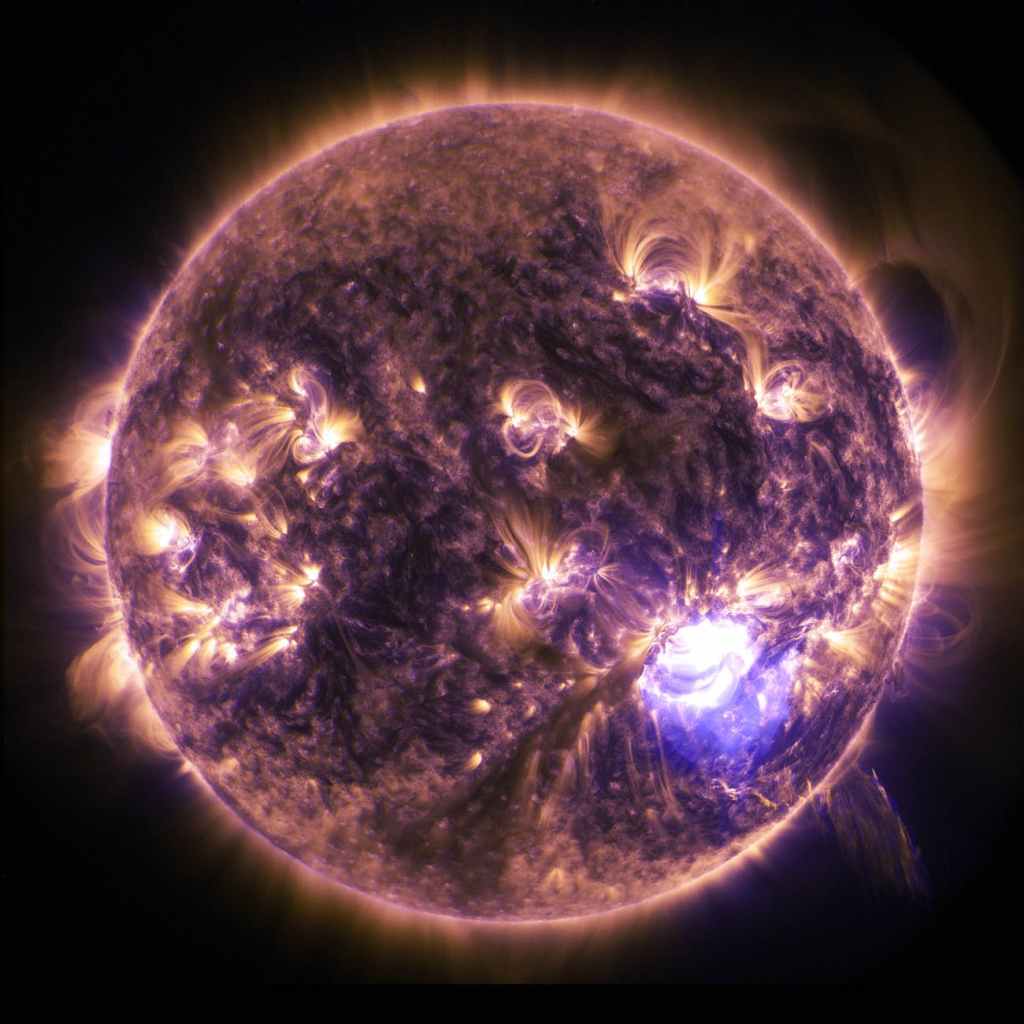
The Sun Is White, People
Glenn looked at the sun and saw that it was sapwood yellow, or bat-fur orange, or both so he photographed the sun and admired the obviousness of truth, all of it. It’s more than one thing but not so many things. Some things it clearly was not. The moon, for example. Not the moon. He got angry, thinking about the people who think the sun could be the moon, if it felt. The sun felt warm on his pink and orange freckled hairy arm and he thought it was turning a little bit red now: and it was so.
Last Stop
for Tony Garan (1962-2022)
Your naked fanfare
touched many.
People you knew
and loved
and who loved you
and some you never knew
though they feel your pull now
like actual moons
people like me
and the driver
who actually touched you
with their vehicle
and kept going.
When you lay bleeding
in the grass
near the school
alone and contemplating
your earthly wounds
and life imitating art
I hope it was a rare night
between street lamps
when the city lets the stars show
and knowing they
like you
were beyond reach
you found peace.
Click
Your usual ride home bailed. En route, I asked you something sagacious about being lesbian, something like So, you’re lesbian, huh? And you said Yeah and I said Cool and we rode over Andrews Causeway in liberal silence, my elbow in the window, you staring out yours, like real high school friends. I pulled onto your street—Middlesex Road—which was ironic, because you were my girlfriend’s best friend. We never had sex and then you got in the middle of it and she dumped me. It wasn’t your fault, I know that now, I said. She told me you overheard me and some other boys saying homophobic shit outside the library. They were, and I laughed. I could tell, when you walked by, it hurt you. But everything’s cool now. I mean, see? I drove you home and it’s so awesome that you forgave me. Man. Could you please tell her I drove you home? At the curb, you got out, leaned in, placed your hand at the base of the open window, looked me in the eyes, like my boss would when I fucked up a delivery, and said Thanks. I think a lot now about the gentle push, the click of the door closing.
The Wind
Who wants to say anything?
Marcia asks
and I think about
the old tapes:
The grandparent interviews.
Their answers labored
for that timbre of legacy
the lithe dips and turns of
expirations in cursive.
I find nothing to say
in their words.
Eighteen years ago
the tape recorder picked up
footsteps,
the whole family’s,
processing to the columbarium where
his ashes were filed
into the wall forever.
Let’s all join hands again, please.
The pastor’s prayer
had barely begun
when the wind kicked up.
Marcia smiled, eyes shut
someone laughed, astonished
and afterward said
it was him or
well, someone approves
but I heard no amen
on that wind.
I find nothing to say
in their words,
though they’re both gone now.
We brought nothing into this world
and we are certain…
this is a waste of time.
Thank you, Lord, for his life…
The pastor’s words
are hardly audible
through the hiss until
the waveform maxes out.
Amen-thunder
drowns the prayer
and the wind unrolls
unbroken
across the microphone.
And it’s all I can hear.
Wanting
Dad’s garage sale’s this weekend.
He’ll do well and knows, but gestures
to the broadcast spreader.
Want it?
I do.
Turning to ask how long’s he had it,
since we moved here’d be my guess,
I wonder if it’s the one I remember.
A few sweet homes before this
Dad marched the lawn with it,
his grass-green jack-in-the-box,
a poisoned storm-cloud turning
in the heaven of formic faith,
pelting their colonies into tiny
Chicxulubs.
His eyes closed
on his own low heaven,
the memory of clouded skies over the farm
in Russiaville, where his father learned the undiminished trades
and fruitful slaughter.
My new step-sister laughed, Oh my God,
he’s going to walk the whole yard doing that
isn’t he? I laughed, too: the familiar form of kinship,
uncarried but cherished
in the dust of term.
That spreader and a posthole digger,
wobbly and rusty,
now lie in the tailgate of our SUV
and I remember when I wanted
to never be him
or buy what he’s selling.
Candidate
I dream of a campaign poster:
my daughter for governor
of Southern Mars Territory.
Her name in hanzi,
and the motto:
“Meant To Be Here”.
I know she’ll win.
It’s always been
the only reason I’m here.
Ocean
after Mondrian, “Ocean 3” and “Ocean 4” charcoal sketches and “Compositie 10 in Zwart Wit”
What is seen that
Will endure?
Mondrian’s
Charcoal ocean
Looks like a city
Lain in ruin.
I see why the moving,
The sea past the seen aspect,
The shimmering
Sun dance.
I see utility,
Its abstract-real black
And white line
Breaks, in filled-
With-peace, prostrate
Crosses.
From the Editor:
We hope that readers receive In Parentheses as a medium through which the evolution of human thought can be appreciated, nurtured and precipitated. It will present a dynamo of artistic expression, journalism, informal analysis of our daily world, entertainment of ideas considered lofty and criticism of today’s popular culture. The featured content does not follow any specific ideology except for that of intellectual expansion of the masses.
Founded in late 2011, In Parentheses prides itself upon analysis of the current condition of intelligence in the minds of these young people, and building a hypothesis for one looming question: what comes after Post-Modernism?
The idea for this magazine stems from a simple conversation regarding the aforementioned question, which drew out the need to identify our generation’s place in literary history.
To view the types of work we typically publish, preview or purchase our past issues.
Please join our community on Facebook, Twitter, or Instagram at @inparenth.
By In Parentheses in Volume 10
44 pages, published 1/15/2026

 in parentheses
enter the discussion: