Tom Misuraca studied Writing, Publishing and Literature at Emerson College in his home town of Boston before moving to Los Angeles. Over 130 of his short stories and two novels have been published. His story, “Giving Up The Ghosts,” was published in Constellations Journal, and nominated for a Pushcart Prize in 2021. His work has recently appeared in voidspace, Art Block and Speakeasy Mag. He is also a multi-award winning playwright with over 150 short plays and 13 full-lengths produced globally. His musical, Geeks!, was produced Off-Broadway in May 2019.
The Plant
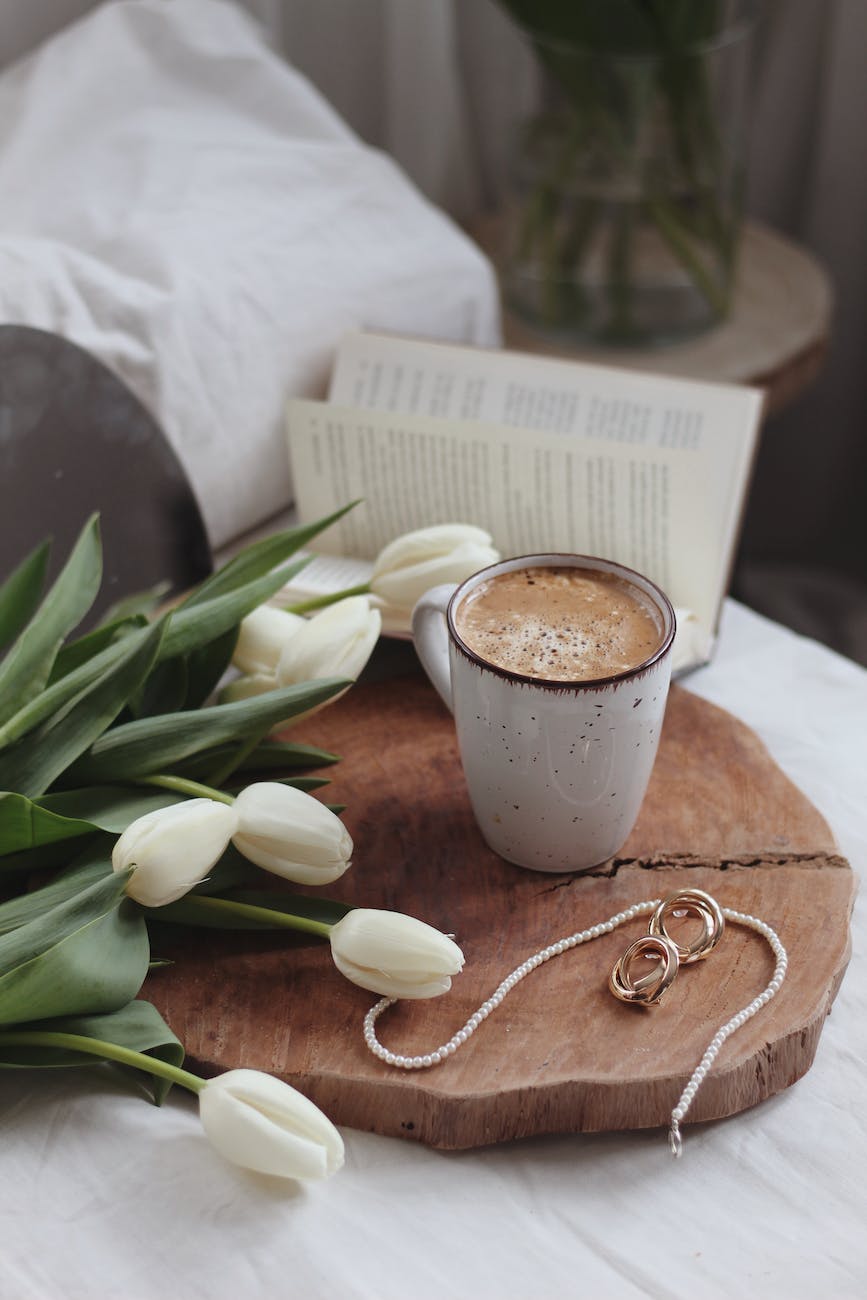
It was their one month anniversary. Carl patted the pile of presents on the passenger’s seat. He bought Karen earrings, a box of candy, a book of love poetry and a bottle of wine. He’d thought of everything.
Except flowers.
Luckily, this was L.A. There were people selling flowers at almost every exit of the freeway. At Karen’s stood a shriveled old woman with a smile full of voids and hair wild enough to nest birds. For a moment, Carl thought she was homeless, but next to her was a cart filled with items.
Carl rolled down his window and asked: “Flowers?”
The woman picked a potted plant off the ground and handed it to Carl. “Give her a plant,” she almost demanded. “It lasts forever. Flowers die too quickly.”
“Good idea,” Carl said and handed her five dollars.
When he arrived, Karen was surprised to the verge of tears at the gifts he wielded. She immediately inserted the earrings. She poured the wine while Carl snuck her a piece of candy. And she suggested reading him poetry at bedtime.
She examined the plant. It had a thick base which split into three stems. On each stem were three or four tiny, pink flower buds.
“Plants are better than flowers,” Carl repeated. “Flowers die quickly, plants can last forever if they’re cared for properly. Like we care for each other.”
“Awww…” Karen kissed Carl passionately.
Dinner was forgotten as they moved into the bedroom.
On the dining room table, the pinks buds stirred.
Carl reminded her of a puppy when he slept, the way his face crinkled. With some breaths, his lips shivered. He was the most beautiful soul Karen had ever encountered. She’d never experienced such intense feelings. Like the sun was shining inside her.
She wanted to spoil this man. She leapt out of bed, inspired to make him an amazing breakfast. It’d been years since she’d cooked French Toast.
In the den, the morning light poured through the blinds and onto the plant. Overnight, the buds had bloomed into beautiful pink flowers. She lifted the pot to admire it closely. The puffy pink flowers emitted a wonderful sweet scent. Karen inhaled deeply.
She didn’t hear Carl creep up behind her.
“Is that-?”
Karen was pleasantly startled. She held the plant before Carl and said, “It bloomed last night.”
“What a sweet coincidence.” Carl kissed her.
“Breakfast?” Karen asked.
“Let’s work up an appetite first.”
As they returned to the bedroom, the flowers stretched towards the sunbeam.
Karen placed the plant on the end table between the wall and her couch. It was a perfect spot because the sun would shine on it most of the day.
The petals closed the day after they opened, but the bulbs remained almost glowing green with the hints of pink within them.
Karen watered it daily and trimmed the rare dead leaf.
Carl was amazed at how vibrant the plant looked.
“You’ve got a naturing soul,” he told her as he scooped her up and carried her into the bedroom.
Their relationship fell into a perfect routine. Carl came over every Saturday afternoon. They’d see a movie or a play, go to dinner, then come back to spend the night together. The next morning, they’d have breakfast together. Every week, the plant grew larger, with more branches spreading from its stem. A bouquet of flowers bloomed every Sunday morning.
Within a month, Karen had to replant it twice.
One Saturday night, Carl turned to Karen and said, “I love you.”
Karen’s heart flourished.
“I love you so much,” she replied.
The following morning, Karen chilled a bottle of champagne for mimosas. As she poured the water for some coffee, she filled a glass to water the plant. Something was different.
She almost dropped the glass.
Overwhelmed, Karen ran into the bedroom.
“Carl!” She shook him awake.
“Aw… geez…” he grunted. “Can’t I sleep?”
“You gotta see this!”
“I don’t gotta see anything.”
She dragged the reluctant Carl into the den.
“Look!” she pointed at the plant.
“Yes, dear, I know,” he said. “It blooms every Sunday morning. You woke me for this?”
“But the flowers!” Karen sounded as if were a ballon, she’d burst. “They’re red!”
Sure enough, the flowers were now ruby red.
“So?”
“They used to be pink.”
“You woke me for this? I’m going back to bed.”
As he returned to bed, a pedal fell to the floor.
Within a month, Carl ceased calling Karen every night. The few times he did, it was late and their chats were rushed. If she called him, he never answered. He still came over every Saturday, but their routine now felt like going through the motions.
The plant’s buds began not closing on Sunday nights. Instead, the tips of the petals grew darker. With each passing day, they began to shrivel.
One week, Carl called Karen on a Friday and said, “I can’t make it this week. Maybe next.”
By Sunday morning, all the petals had dried out, turned brown and fallen to the floor.
When Carl arrived the following Saturday, the branches on the plant were dried out and no new branches or buds had appeared.
Karen greeted Carl with a kiss.
“Can’t I get into the house without you clawing me,” he complained.
“Sorry…”
He pulled his arm away when she tried to caress it while watching television.
“I’m trying to watch the game!” he snapped.
“Sorry…”
From the tallest branch of the tree, a black, oily substance oozed onto the floor.
“That’s gross!” Carl exclaimed. “Throw that thing out. It’s dead.”
“But you gave it to me!”
“It was alive when I gave it to you. You killed it.”
Karen used a wet towel to clean up the muck. The rotten scent nauseated her. It took all her strength to keep from vomiting.
After the game, Carl said, “I’m going to bed. You coming?”
“Yeah…”
Carl had his way with her unenthusiastically. Everything about it felt clumsy and cold.
Once he was done, he got out of bed and dressed.
“I gotta go.”
“But-”
Carl shot her an angry glare. Karen stopped herself from begging him to stay. She hid under the covers until she heard the front door slam.
She cried herself to sleep.
Karen slept until noon the next day. She awoke with a slight migraine.
She made her way to the couch and stared at the ceiling. Eventually, her eyes fell to the plant. Its dry stems drooped off the table as if they were reaching for the floor.
Karen collapsed onto the couch, her hands dangling off the side.
How could the man who claimed to love her be so brutal? It gave her such physical pain that she had to call in sick to work that week. All she could do was play her most melancholy albums and lay on the couch.
The plant grew rapidly. The weed-like branches entwined and creeped up the side of the couch. Black oily, liquid oozed from it.
Karen constantly checked her phone to see if Carl called. He didn’t.
Karen pounced on the phone when it rang the following Saturday.
“I can’t do this anymore,” he told her. “You’re too clingy. I need my space.”
“You said you loved me.”
“I did not.”
“I hate you!” Karen shouted through her tears.
“Get over it,” he said, then hung up.
Karen cried herself to sleep on the couch.
The sun shining through the window woke her. She sat up tried to summon the strength to get off the couch. She couldn’t.
She glanced at the plant. Within its tangled branches, new flowers blossomed. They were thick, grey flowers, spreading open to reveal a rotten pulp. White liquid bubbled out of them like puss from a wound.
Karen turned away, disgusted.
The branches slowly crawled over the couch. As the grey flowers shriveled, they fell onto the floor and couch, leaving little blobs of gunk that made sewage seem pleasant.
Karen didn’t bother to call in sick that week. She ignored any call that wasn’t from Carl. None of them were from Carl.
The plant’s branches spread over the room like veins. It ejaculated black muck in harmony with Karen’s tears.
The branches engulfed her.
The landlady came with the police to enter the apartment. All they found was an empty pot in the middle of the den.
It was their one month anniversary. Carl patted the pile of presents on his passenger’s seat. He bought Ellen a bracelet, a box of candy, a book of love poetry and a bottle of champagne. He’d thought of everything.
Except flowers.
Luckily, this was L.A. There were people selling flowers at almost every exit of the freeway. At Ellen’s stood a shriveled old woman with a smile full of voids and hair wild enough to nest birds. Something about her was familiar.
Carl rolled down his window and asked: “Flowers? Oh wait! What about a plant?”
“For you,” the woman replied, “flowers.” She handed him a bouquet. “You’re not nurturing.”
From the Editor:
We hope that readers receive In Parentheses as a medium through which the evolution of human thought can be appreciated, nurtured and precipitated. It will present a dynamo of artistic expression, journalism, informal analysis of our daily world, entertainment of ideas considered lofty and criticism of today’s popular culture. The featured content does not follow any specific ideology except for that of intellectual expansion of the masses.
Founded in late 2011, In Parentheses prides itself upon analysis of the current condition of intelligence in the minds of these young people, and building a hypothesis for one looming question: what comes after Post-Modernism?
The idea for this magazine stems from a simple conversation regarding the aforementioned question, which drew out the need to identify our generation’s place in literary history.
To view the types of work we typically publish, preview or purchase our past issues.
Please join our community on Facebook, Twitter, or Instagram at @inparenth.

By In Parentheses in Volume 10
44 pages, published 1/15/2026

 in parentheses
enter the discussion: